Kill Tony: The Most Offensive Show Every Catholic Creator Should Watch
If your intake is Catholic-only, you haven't actually heard today's culture — and a crude, chaotic Austin comedy show might be the best fieldwork a digital missionary can do.
I mean this literally.
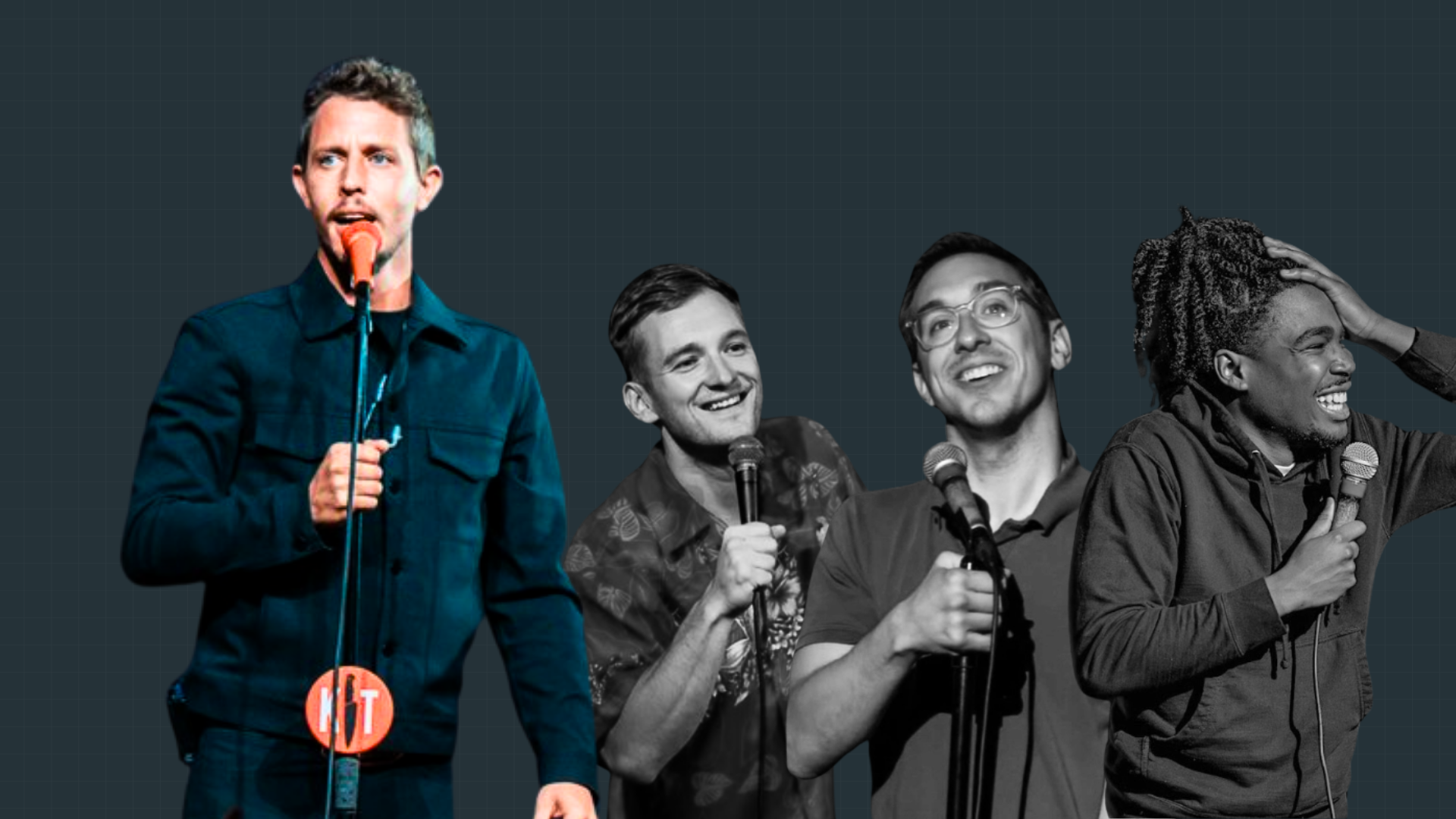
It's crude. It's chaotic. Tony Hinchcliffe makes jokes about a woman's progressive muscle disease while she's sitting in a wheelchair right in front of him. He roasts a blind comedian for struggling to find the mic stand right after awarding him a golden ticket — the highest honor the show offers. People come to the stage having never done comedy before and get absolutely destroyed on a live podcast with a million weekly viewers. Sometimes I literally cringe so hard I have to look away. It's amazing.
You should be watching it every week.
Not because it's edifying. I should warn you ahead of time... It's EXTREMELY offensive, obscene, crass, and juvenile. But if you can handle it, you should be watching it because it's true.
And if you're a Catholic creator who wants to learn to communicate to people outside your bubble, you can't afford to stay in the catholic internet echo chamber.
You won't grow by only consuming pre-sanitized content for a Catholic audience.
Joseph Pieper wrote that the abuse of language is always an abuse of the person. It treats them as an object to be moved rather than a subject to be met. You cannot meet a subject you've never listened to.
You're a digital missionary. Act like one.
The problem many Catholic creators have isn't passion or theology. It's their mental model of modern communication in a digital economy.
Most of us grew up on what I call the broadcast model. If you're lucky to ever get a platform, you have a few minutes of fame and that's it forever. Who you are and what you say is locked into posterity forever.
And the broadcast model influences how you think about the "audience" or, the person on the receiving end of your communication.
In the broadcast model: you produce, they consume.
One direction. No encounter.
You have something to say and you say it, and the measure of success is whether people clicked, liked, or subscribed. This is the TV model applied to the internet, and it's been dying for more than a decade.
I believe the model replacing it is communion-based.
And I believe Catholic anthropology has more to say about what works in modern digital communication and marketing than most of us realize.
Gaudium et Spes §24 says it plainly: "Man, who is the only creature on earth which God willed for itself, cannot fully find himself except through a sincere gift of self."
All authentic and effective modern digital communication (what I've been calling Cordial Communication) is ordered toward the sincere gift of self. Not persuasion or conversion optimization.
Communion between persons.
Tony Hinchcliffe is doing this every Monday night in a comedy club in Austin, Texas.
Most Catholic creators aren't.
If your intake is Catholic-only, you haven't actually heard today's culture.
Kill Tony pulls random names from a bucket. What walks onto stage is an unfiltered cross-section of the unchurched world:
- a 22-year-old Moroccan Muslim woman who works on the show's production team and spends her free time reading poetry, baking bread, and breeding Dobermans.
- A blind comedian who found Kill Tony while sitting alone in the dark after losing his sight at 18, listening to podcasts he couldn't watch.
- A woman in a wheelchair with a progressive, degenerative muscle disease who opens with a joke about men bragging that they slept with someone so well "she couldn't walk the next day."
These are real people telling you what they actually care about, what they're actually carrying, and how they actually process the world.
And I've found it's nothing like the Catholic media version of those things.
If you want to reach people outside the Church, you have to actually listen to people outside the Church.
Kill Tony is cheap fieldwork for digital missionaries.
Joseph Pieper wrote that the abuse of language is always an abuse of the person. It treats them as an object to be moved rather than a subject to be met.
You cannot meet a subject you've never listened to.
Tony engages people. Most Catholic creators just broadcast.
Here's what most people miss about Kill Tony: the 60-second comedy set is not the point.
The interview after each person's set is the most important part of the show.
That's where Tony asks: Where are you from? What do you do? What's your family like? Why are you doing this?
Why are you.........like this?
This is the encounter that often catches me off guard with the level of sincerity and self-revealing openness.
And the type of questions Tony asks that get genuine responses would make anyone who's led a brain dead small group extremely jealous.
Why did your previous wife leave you? Why are you single? What do you think about Jews? What's the worst part about being a police officer? How come you're still a virgin? How did you handle your Dad passing away earlier this year? Why do you think you're an alcoholic?
When he speaks to a woman in the wheelchair, Fiona Collie, a comedian with a degenerative neurological disease who's been doing standup for three years, he doesn't perform sensitivity around her disability. He calls her the hottest girl in a wheelchair he's ever seen. Then he asks "so it's going to get worse?" When she says yes, he says "party time" with a grin. And then he asks about her boyfriend, her travels, her life, treating her like any other comedian who showed up.
Honesty is hospitality. But only if you actually want the person to grow.
The Kill Tony Show and the guest judges who sit with Tony giving feedback are honest to the point of being brutal.
Like....mouth drop wide open brutal.
Roseanne Barr sits in as a guest and asked one poor woman, who was reading her jokes off cue cards.... "Who told you you were funny? And, seriously. Who told you you were funny? Because you were awful."
She tells her she should have known that step one would have been to memorize her "shitty material" and that she owed the art form more respect.
Later Roseanne is smiling, pointing at her, as Roseanne and Tony say she could be the next big star for all anyone knows.
But she needs to go get better first.
The critique lands because it's honest. No one is confused about whether someone's performance is an indicator of their worth as a person.
You might be a great lady. But you suck as a comedian...tonight.
During one show Tony gives Chris Celio a golden ticket, the highest honor on the show, and he gets a standing ovation followed by a moment where the crowd goes completely silent with emotion.
And then immediately, as Chris fumbles for the mic stand, Tony shouts, "worst handler ever, what are you, blind too?!" The crowd loses it. Chris is grinning.
Chris is blind.
The roast after the commissioning is what makes it feel like love. Actually seeing a person.
If he hadn't said anything, you might have said Tony was acting blind.
Joseph Pieper said when language stops pointing toward reality and starts producing an effect, it becomes a tool of domination. That's not courage. That's contempt with a theological alibi.
Adam Grant draws the distinction as well when defining different "modes" of communication.
There's a difference between preaching (defending your position), prosecuting (attacking theirs), and what he calls scientific thinking (staying genuinely open and curious). Tony operates in the third mode. He doesn't know who's coming out of that bucket. He's genuinely curious. And the difference between him and the uncharitable pundit-preacher who "speaks hard truths" is simple: Tony wants the person to get better. The pundit wants to win.
Carl Rogers called this unconditional positive regard — receiving the person as they actually are rather than as you need them to be. It works in therapy. Why can't it work in communication? You can't speak to a heart you've never actually received.
The Kill Tony format trusts the process. Not the outcome.
Names are pulled from a bucket. Tony doesn't know who's coming up next. There's no script, no curated contestants, no controlled outcomes. The format creates the conditions for something real to happen... and then gets out of the way.
Most Catholic content does the opposite.
We engineer every outcome, script every encounter, predict every result. We're so afraid of what someone might say — or what we might have to receive — that we've built systems that prevent encounter from happening at all.
Cor ad cor, heart to heart communication, can't be manufactured. It can only happen in conditions where you're genuinely open to being surprised, moved, and changed by the person in front of you. The unpredictability isn't the bug. It's the whole point.
I think this is exactly why podcasting has consistently been so popular and powerful in our culture for years.
So what do you actually do with this?
Get out of the bubble. Diversify your intake.
Figure out what people who aren't like you find funny, moving, and true.
Listen to what the 22-year-old Moroccan woman cares about before you decide what she needs to hear.
Be honest — not nice.
Nice is actually a form of contempt because it withholds the truth from someone you've already decided can't handle it. Genuine care tells the truth in a way the other person can actually receive.
Actually see and engage with people as they are.
Not the idea of people. Not the demographic. The person. Let them be surprising. Let them be more than you expected. Let them move you. Become curious about them. Ask questions that make you both uncomfortable.
The goal of Cordial Communication isn't persuasion. It isn't conversion optimization. It's communion.
The sincere gift of self offered to another, received, and returned. That's what the whole thing is for.
Kill Tony's best moment isn't the joke. It's what Tony says to the people who didn't quite get there — the ones who tried, who bombed, who showed up anyway.
I see you. You're not there yet. Come back when you've put in some practice.
That's the encounter. That's what the Church is supposed to do.
We have the theology for it. We have the anthropology for it. We have two thousand years of knowing that the human person is made for exactly this.
Now we need the courage to actually do it.
Edmund Mitchell helps Catholic creators turn their obsessions into intellectual property, authority, and income. He cofounded Real + True (under the patronage of the Holy See, 45+ countries), is building the Faith & AI Project, and writes field notes from inside the work — building Cordial Creators in public.
No comment section here. If something landed — or didn’t — hit reply to the newsletter and tell me. I read the replies.